


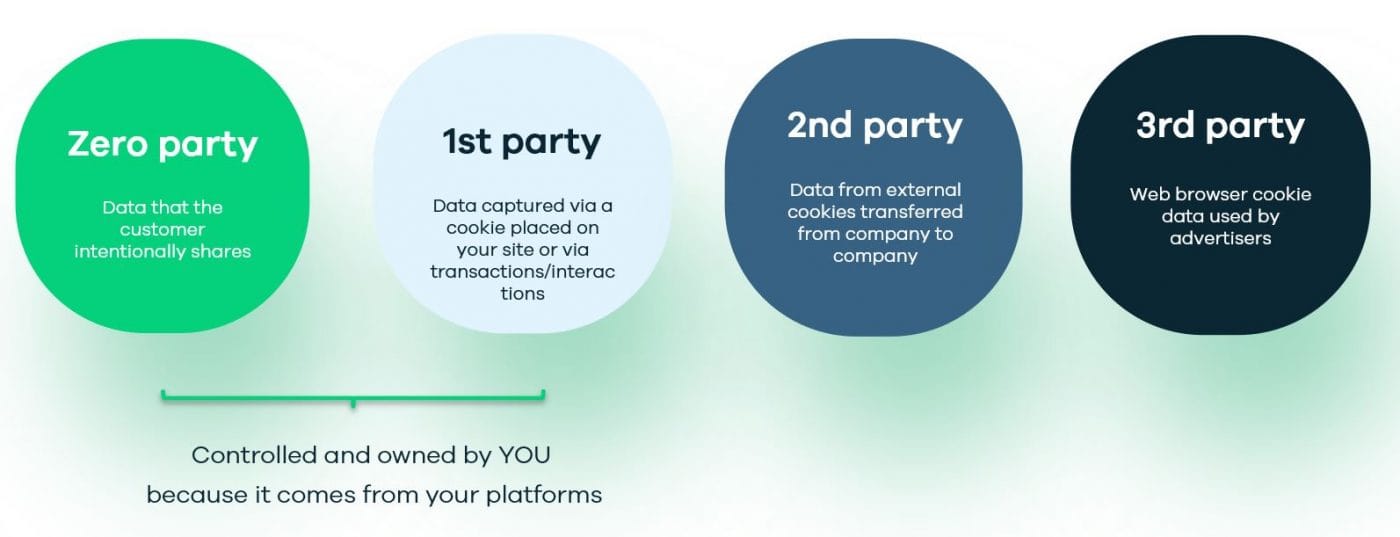
Say hello to consent data-driven marketing
Clearly, a new marketing frontier is emerging that is likely to benefit companies, advertisers and consumers alike. Consent-driven marketing, as the name suggests, means that zero-party and first-party cookies will become a driving force for marketers and advertisers to create more personalized experiences for their customers. What’s more, zero-party and first-party data will play integral roles in more holistic, omni-channel marketing strategies that will go beyond “simple” customer acquisition and shift the focus to retention and loyalty.
Many studies have shown that personalization, in part thanks to zero-party and first-party data, can help businesses carry out even more successful marketing and sales campaigns. According to the research firm McKinsey and Company, personalization can:
- Increase conversion rates by up to 15%
- Boost customer satisfaction rates by up to 20%
- Reduce marketing and sales costs by between 10 and 20%
Rather than burning cash on mistargeted and static mass advertising, which was basically the case when brands and advertisers counted on only third-party cookies to build awareness, companies are now laying the foundations for data-driven personalization and marketing strategies.
How can a company leverage zero-party and first-party data?
Zero-party and first-party data are key for bother customer acquisition and retention. For customer acquisition, this data provide information on current clients and prospects in order to more efficiently target similar types of personas that may be interested in your products or services. You could start by initiating online ads with your most popular products to cast a wider net and appeal to like-minded potential customers.
In terms of retention, zero-party and first-party data can contribute to mitigating plummeting engagement rates. For example, if the level of clicks, open rates or transactions stemming from emails are falling behind objectives, you could tap into the data you have to push compelling content to customers and boost the perceived value of your business with targeted clients.
To attract customers and increase their total lifetime value, companies must develop a unified data and content journey that connects data from a variety of sources together to create customer experiences that are consistent across each customer touchpoint, highly relevant and designed to anticipate future needs.
First, companies should centralize zero-party and first-party data from all sources, including their websites, ERPs, CRMs, POS systems, etc. into a customer data platform. A customer data platform merges and connects all your customer data to the various tools your business uses. Once centralized and cleansed for standardization, the data can then be mined to better understand specific personas, market segments and trends.
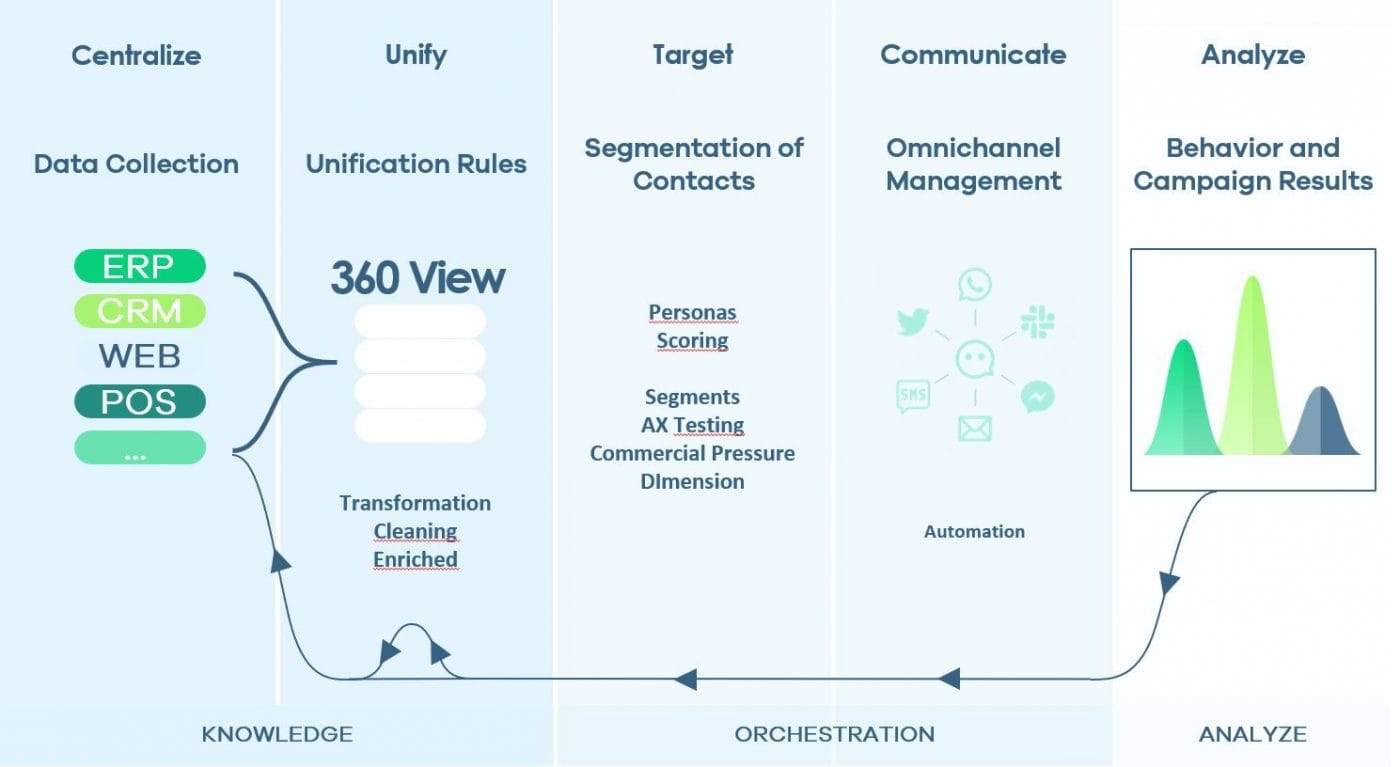
Armed with deep customer analytics, companies can then orchestrate and deploy omni-channel marketing strategies that truly resonate with their target audiences. Results can be monitored to further enrich customer data, automate processes—and inevitably improve each customer’s overall brand experience. In turn, this closed-loop cycle will extend the total lifetime value of customers.
At Dialog Insight, we have all the technology you need to track and use your zero and first-party data. Our Journey module will collect and store information from known and unknown visitors in order to offer a more personalized experience without using browser cookies, which frees us from any browser policies.
Getting started with zero-party and first-party data
Collecting zero-party data requires some thought into what type of information or content customers are looking for during the buyers’ journey and depending on what stage in the sales funnel they are at.
Zero-party data can be acquired on a website or through other touchpoints (think customer service calls, sales discussions, etc.) Here are some examples of getting zero-party information from on your website:
- Account registration
- Subscribing to newsletters, emails, SMS notifications or mailing lists
- Gated content (ebooks, whitepapers, case studies, etc.)
- Quizzes and surveys
- Chatbots
- Virtual try-ons
- Demo requests
- Signing up for loyalty programs
- Using a Preferences Center
- Polls and contests on social media
- Downloading and creating an account in an integrated mobile app
With respect to first-party cookies, keep in mind that this means it’s your website domain that is collecting the data. While this enables complete ownership of data, make sure you inform visitors about cookie usage and offer a means for them to accept them or not.
Normally, website visitors will accept first-party cookies if they enjoy a browsing experience tailored to their needs. Interestingly, first-party cookies can only be deleted by users; they cannot be prevented via cookie blockers, such as private browsers or ad blockers.
Harnessing the tremendous potential of zero-party and first-party data will become paramount for e-commerce businesses and companies of all types to out-edge the competition and improve both customer acquisition and retention. Need help navigating the cookie-verse? Reach out to one of our specialists today!