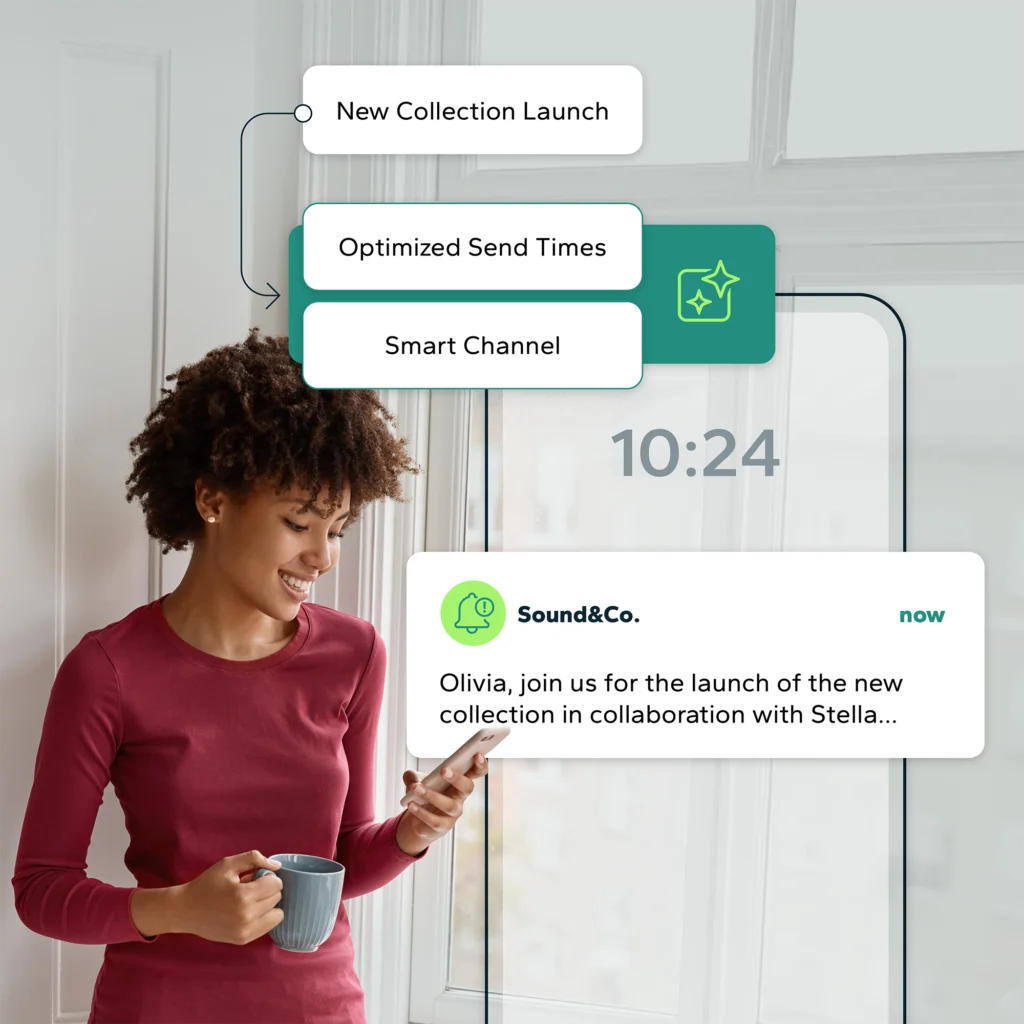
When we talk about personalized marketing and hyper-segmentation, customer data becomes the most valuable strategic asset for companies. Yet, in many organizations, this data remains fragmented: CRM, email marketing platform, advertising tools, e-commerce, customer service…
The result is a partial view of the customer, inconsistent communications, and missed opportunities.
How to solve this problem? The answer comes down to three words: Customer Data Platform. But what exactly is a CDP? How does it differ from a CRM or a marketing automation tool? And above all, how does it fit into a modern, performance-oriented marketing strategy?
This article offers you a complete, strategic, and operational analysis.
Definition: what is a Customer Data Platform?
A Customer Data Platform (CDP) is a technology platform designed to collect, unify, structure, and activate customer data coming from multiple sources, in order to create a single customer view that can be used in marketing.
Concretely, it makes it possible to:
- Centralize data from different systems (website, mobile application, CRM, email marketing, SMS, e-commerce, points of sale). This means connecting heterogeneous sources and making them communicate within a common environment, thus eliminating organizational and technical silos.
- Reconcile customer identities, by linking several identifiers (email, phone number, web identifier, purchase history) to a single profile. This identity resolution is essential to avoid duplicates and obtain a coherent view of the customer journey.
- Structure and normalize data, in order to make it usable for marketing teams. A CDP transforms raw data into organized information, ready to be segmented and activated.
- Activate this data in real time, in personalized and omnichannel campaigns. The goal is not only analytical: it is about immediately leveraging the insights generated.
A CDP is therefore not limited to storage: it is a strategic activation engine.
CDP vs CRM vs automation tool: what are the differences?
It is common to confuse the CDP with other marketing solutions.
CDP vs CRM
- The CRM is mainly oriented toward managing the commercial relationship and tracking interactions (sales, support). It primarily serves sales teams and customer service.
- The CDP is marketing-oriented and focuses on unifying data coming from multiple channels, including behavioral and transactional data. It enables cross-functional use of the data.
In short, the CRM manages the relationship, while the CDP structures and activates data at scale.
CDP vs marketing automation platform
- The automation tool runs campaigns (emails, SMS, automated scenarios).
- The CDP provides the unified, enriched, and segmented data that feeds these campaigns.
In an advanced marketing strategy, the CDP becomes the central foundation on which activation and orchestration actions rely.
Why has a CDP become strategic in 2026?
Several factors make the Customer Data Platform essential:
- The gradual phase-out of third-party cookies, which requires making better use of data collected directly from customers.
- The growing requirement for personalization, as consumers expect experiences tailored to their behaviors and preferences.
- The multiplication of touchpoints (web, mobile, store, customer service), making the customer view more complex to consolidate.
- Data protection regulations, requiring clear, centralized, and compliant governance.
A CDP makes it possible to turn raw data into a lasting competitive advantage, by structuring a mastered strategic asset.
The concrete benefits of a CDP for your marketing strategy
A unified customer view
A CDP creates a consolidated customer profile, integrating:
- A detailed purchase history, making it possible to assess value and preferences.
- Web behavior (pages viewed, products consulted, cart abandonment).
- Email and SMS interactions (opens, clicks, replies).
- Declared data (preferences, interests).
- Overall omnichannel engagement.
This unified view enables much more precise segmentation and an in-depth understanding of the customer lifecycle.
Advanced personalization
Thanks to enriched and structured data, you can:
- Trigger campaigns based on real-time behavior, for example after a product visit.
- Adapt offers based on customer value or purchase likelihood.
- Personalize journeys based on detected preferences or past interactions.
The CDP makes personalization scalable, consistent, and measurable.
Consistent omnichannel orchestration
The CDP feeds the different channels: email marketing, SMS marketing, push notifications, digital advertising.
It makes it possible to avoid:
- Contradictory messages sent across different channels.
- Duplicates that harm the experience.
- Over-messaging that can cause disengagement.
The customer experience becomes smooth, consistent, and aligned with actual behavior.
Better analytical performance
A Customer Data Platform makes it easier to:
- Cross-channel conversion tracking, to understand the real impact of each touchpoint.
- Customer lifetime value (CLV) analysis, to guide marketing investments.
- Identifying segments with high growth potential.
- Budget optimization based on consolidated and reliable data.
The CDP thus becomes a strategic decision-making tool.
How to integrate a CDP into your marketing strategy?
Implementing a CDP should not be only technological. It must also be strategic.
Step 1: Map your data sources
Identify existing systems, available data flows, and areas of fragmentation. This step helps prioritize integrations.
Step 2: Define priority use cases
For example:
- Reducing churn through targeted campaigns.
- Optimizing cart-abandonment follow-ups.
- Improving retention through personalized journeys.
These use cases make it possible to quickly demonstrate business value.
Step 3: Structure data governance
Determine who is responsible for quality, compliance, and activation. Clear governance ensures the project’s long-term sustainability.
Step 4: Measure results
Define clear KPIs: increased conversion rate, improved retention, higher average revenue per customer, optimization of marketing ROI.
Common mistakes when deploying a CDP
- Underestimating the technical complexity of integration and the resources required.
- Launching the project without clear, measurable business objectives.
- Neglecting data quality and normalization upfront.
- Isolating the CDP from the rest of the marketing strategy and operational teams.
A high-performing CDP must be thought of as a lever for overall transformation, and not as a simple project management effort.
How Dialog Insight supports your CDP strategy
Dialog Insight offers an integrated approach combining advanced data management, smart segmentation, and omnichannel activation.
The company enables, among other things:
- Centralizing and unifying customer data, to create a single view that can be leveraged across all marketing channels.
- Advanced segmentation based on behavioral and transactional criteria, enabling precise and high-performing targeting.
- Omnichannel activation (email, SMS, etc.) directly from unified data, ensuring consistency and speed of execution.
- Detailed analytics tools, geared toward marketing performance and strategic decision-making.
By integrating a CDP logic at the heart of your ecosystem, Dialog Insight makes it possible to align technology, data, and marketing strategy with a view to sustainable growth.
The CDP as a strategic pillar
The Customer Data Platform is not a simple technological tool. It constitutes the foundation of a modern marketing strategy, driven by data, personalization, and performance.
By unifying data, improving segmentation, and facilitating omnichannel activation, a CDP turns the customer relationship into a lasting competitive advantage.
In 2026, organizations that master their first-party data do not just communicate: they orchestrate intelligent, consistent, and high-performing experiences at every touchpoint.