Here we are in December already! Planning for the upcoming year begins as one year comes to an end. Marketing teams must create an editorial calendar for the upcoming year’s activities in order to schedule the creation of content and the implementation of strategies. This is your chance to prepare the calendar if you haven’t already.
Why is it important to create an editorial calendar and what does it involve?
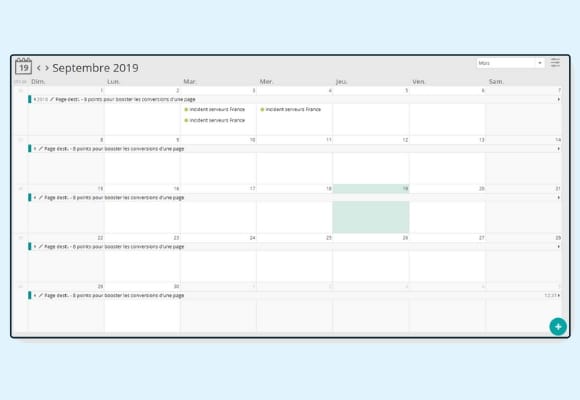
An editorial calendar is a document that manages the creation and release of your marketing content for the next year. It outlines your content marketing strategy, dates, topics, and types of content. An editorial calendar can help you save time and resources by keeping track of the right people to reach at the right time with the right message. It makes it easy for everyone in your organization to know what content is coming up and when it’s supposed to be published.
An editorial calendar will also ensure that you are producing content consistently throughout the year instead of haphazardly launching campaigns as they come to mind. You’ll be able to see when certain topics will be relevant so you can plan ahead and publish content at the right time. It will also help you plan content for future marketing campaigns so you can ensure your campaigns aren’t overwhelming your audience. An editorial calendar is essential when managing multiple marketing campaigns at the same time.
Steps to create an editorial calendar
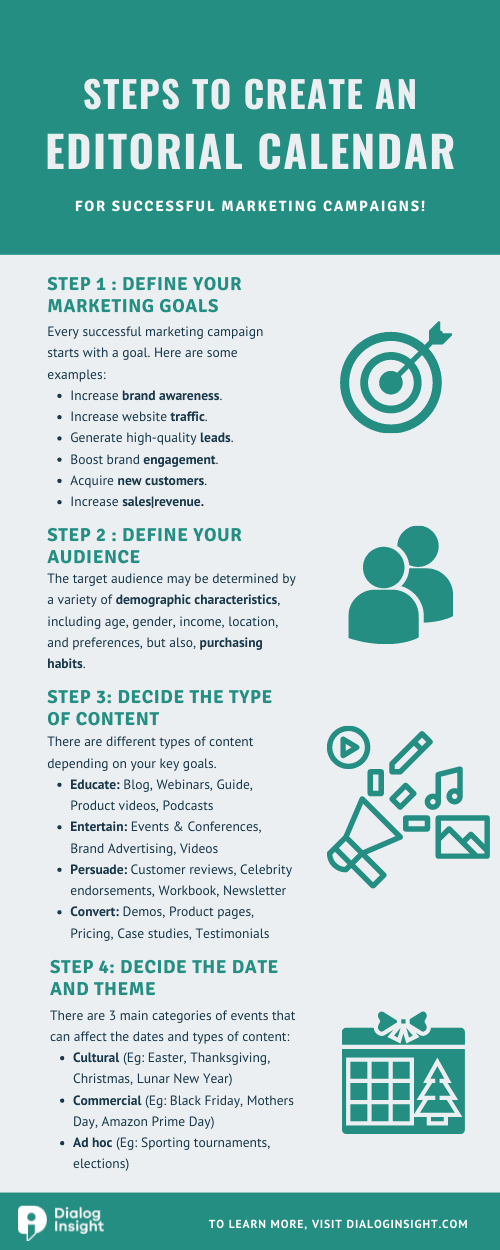
Step 1: Define your marketing goals
Every successful marketing campaign starts with a goal. Before you create your editorial calendar, you should first understand the goals of your marketing campaign. A marketing goal is a precise, quantifiable target that supports your overall business objectives. An unfocused campaign is ultimately a waste of money.
Increase brand awareness. | Increase website traffic. |
Generate high-quality leads. | Boost brand engagement. |
Acquire new customers. | Increase sales\revenue. |
If you’re hosting a special event, you want to increase your brand awareness. If you’re launching a new product, you want to increase sales by generating more leads. If you’re not sure what your goals should be, you can refer to this article. Once you know your goals, you can decide how you want to reach your target audience.
Step 2: Define Your Audience(s)
You have your goals set, now it’s time to define your audience. Your goals will determine who your audience is, and your audience will determine what types of content you publish. Your target audience is the customers most likely to be interested in your product or service. As a result, it is the group that should see your advertising campaigns. A range of demographic and behavioral traits may be used to determine the target audience.
Demographic | Behavioral |
Age | Purchasing Habits |
Gender | Customer Journey Stage |
Income | User Status |
Location | Spending Habits |
Interests | Brand Interactions |
Occupation | Benefits Sought |
If you want to increase brand awareness, you will likely target a large audience (e.g. women above the age of 25 with children). If you want to increase sales, you would instead target a smaller audience (e.g. moms between the age of 25-35 who have children under the age of 7). Once you know who your audience is, you can then decide what types of content you want to publish.
Step 3: Decide on the type of content you will produce
The type of content you decide to publish will help you reach your audience better. Your strategy should include different types of content that fulfill those four key goals.
Key goals | Types of content |
Educate | Blog, Webinars, Guide, Product videos, Podcasts |
Entertain | Events & Conferences, Brand Advertising, Videos |
Persuade | Customer reviews, celebrity endorsements, workbook, Newsletter |
Convert | Demos, Product pages, Pricing, Case studies, testimonials |
Step 4: Decide on a Date and Theme
Once you’ve decided on the type of content you want to publish, you need to decide on a publishing date and theme. The date and theme you choose will depend on your marketing campaign’s objectives and some important dates coming.
Seasonality and corporate events are subjects to take into consideration when planning an editorial calendar. Seasonality events occur during the same weeks each year. Corporate events are frequently staged in a corporate setting to convey company strategy, alter company culture, introduce a product or service, inspire, develop, or recognize employees, or affect how customers perceive a brand on the outside.
Seasonality Events | Corporate Events |
Cultural holidays (e.g. Easter, Thanksgiving, Christmas, Lunar New Year) | For Clients (e.g.Product launches, Seminars) |
Commercial holidays (e.g. Black Friday, Mothers Day, Amazon Prime Day) | For Employees (e.g. Team building, Company’s milestones anniversary) |
Ad hoc events (e.g. Sporting tournaments, elections) | For Prospects (e.g. Participation in Trade Show) |
If your goal is to increase brand awareness, you would likely choose a date around a major holiday. If your goal is to increase sales, you would likely choose a date when people are more likely to shop and the theme will be in accordance with that specific period (e.g. Black Friday, Cyber Monday, etc.).
Conclusion
Now that you’ve created an editorial calendar, you should keep it consistent. You should make a point to publish content on the dates you’ve outlined. If you’re hosting a special event, you should also make sure to publish content leading up to the event. Make sure each piece of content aligns with your goals. You’ll have successfully created an editorial calendar if you’ve completed all the previous steps.

Did you know Dialog Insight can help you in your marketing campaign orchestration?
Once you have created your editorial calendar, contact us. We have everything you need to generate effective marketing campaigns and save time and money. Visit our website and contact our team to see how we can help you!